[Harvest to Table]
Artichoke. Grow 1 to 2 plants per person. Yield 12 buds per plant after the first year. Space plants 4 to 6 feet apart.
Arugula. Grow 5 plants per person. Space plants 6 inches apart.
Asparagus. Grow 30 to 50 roots for a household of 2
to 4 people. Yield 3 to 4 pounds of spears per 10-foot row. Space plants
12 inches apart.
Bean, Dried. Grow 4 to 8 plants per person. Yield in pounds varies per variety. Space plants 1 to 3 inches apart in rows 2 to 3 feet apart.
Bean, Fava. Grow 4 to 8 plants per person. Space plants 4 to 5 inches apart in rows 18 to 30 inches apart.
Bean, Garbanzo, Chickpea. Grow 4 to 8 plants per
person. Yield 4 to 6 pounds per 10-foot row. Space plants 3 to 6 inches
apart in rows 24 to 30 inches apart.
Bean, Lima. Grow 4 to 8 per person. Yield 4 to 6
pounds per 10-foot row. Space bush lima beans 3 to 6 inches apart in
rows 24 to 30 inches apart; increase distance for pole limas.
Beans, Snap. Grow 4 to 8 plants total of each
variety or several varieties per person. Yield 3 to 5 pounds per 10-foot
row. Space plants 1 to 3 inches apart in rows 2 to 3 feet apart.
Beans, Soy. Grow 4 to 8 plants per person. Yield 4 to 6 pounds per 10-foot row. Space plants 2 inches apart in rows 2 to 3 feet apart.
Beets. Grow 5 to 10 mature plants per person. Yield 8
to 10 pounds per 10-foot row. Space plants 3 inches apart for roots–1
inch apart for greens.
Broccoli. Grow 2 to 4 plants per person. Yield 4 to 6 pounds per 10-foot row. Space plants 18 to 24 inches apart in rows 3 feet apart.
Brussels sprouts. Grow 1 to 2 plants per person. Yield 3 to 5 pounds per 10-foot row. Space plants 18 to 24 inches apart in rows 36 inches apart.
Cabbage. Grow 4 to 8 plants per person. Yield 10 to 25 pounds per 10-foot row. Space plants 24 to 30 inches apart.
Carrots. Grow 30 plants per person. Yield 7 to 10 pounds per 10-foot row. Thin plants to 1½ to 2 inches apart in rows 12 inches apart.
Cauliflower. Grow 1 to 2 plants per person. Yield 8 to 10 pounds per 10-foot row. Space plants 18 to 24 inches apart in rows 3 feet apart.
Celery. Grow 5 plants per person. Yield 6 to 8 stalks per plant. Space plants 6 inches apart in rows 2 feet apart.
Chayote. Grow 1 vine for 1 to 4 people. Set vining plants 10 feet apart and train to a sturdy trellis or wire support.
Chicory. Grow 1 to 2 plants per person. Space plants 6 to 12 inches apart in rows 2 to 3 feet apart.
Chinese Cabbage. Grow 6 to 8 heads per person. Space plants 4 inches apart in rows 24 to 30 inches apart.
Collards. Grow 2 to 3 plants per person. Yield 4 to 8 pounds per 10-foot row. Space plants 15 to 18 inches apart in rows 3 feet apart.
Corn. Grow 12 to 20 plants per person. Yield 1 to 2
ears per plants, 10 to 12 ears per 10-foot row. Space plant 4 to 6
inches apart in rows2 to 3 feet apart.
Cucumber. Grow 6 plants per person. Grow 3 to 4
plants per quart for pickling. Yield 8 to 10 pounds per 10-foot row.
Space plants 1 to 3 feet apart in rows 3 to 6 feet apart.
Eggplant. Grow 1 to 2 plants per person. Yield 8
fruits per Italian oval varieties; yield 10 to 15 fruits per Asian
varieties. Space plants 24 to 30 inches apart in rows 3 feet apart.
Endive and Escarole. Grow 2 to 3 plants per person.
Yield 3 to 6 pounds per 10-foot row. Space plants 6 to 12 inches apart
in rows 2 to 3 feet apart.
Garlic. Grow 12 to 16 plants per person. Yield 10 to
30 bulbs per 10-foot row. Space cloves 3 to 6 inches apart in rows 15
inches apart.
Horseradish. Grow 1 plant per person. Space plants 30 to 36 inches apart.
Jicama. Grow 1 to 2 plants per person. Yield 1 to 6 pound tuber per plant. Space plants 8 to 12 inches apart.
Kale. Grow 4 to 5 plants per person. Yield 4 to 8 pounds per 10-foot row. Space plants 12 inches apart in rows 12 inches apart.
Kohlrabi. Grow 4 to 5 plants per person. Yield 4 to 8 pounds per 10-foot row. Space plants 4 to 6 inches apart in rows 30 inches apart.
Leeks. Grow 12 to 15 plants per person. Yield 4 to 6
pounds per 10-foot row. Space plants 2 to 4 inches apart in rows 6 to
10 inches apart.
Lettuce. Grow 6 to 10 plants per person; plant
succession crops with each harvest. Yield 4 to 10 pounds per 10-foot
row. Space looseleaf lettuce 4 inches apart and all other types 12
inches apart in rows 16 to 24 inches apart.
Melon. Grow 2 to plants per person. Yield 2 to 3 melons per vine. Space plants 3 to 4 feet apart in rows 3 feet wide.
Mustard. Grow 6 to 10 plants per person. Yield 3 to 6
pounds per 10-foot row. Space plant 6 to 12 inches apart in rows 15 to
30 inches apart.
Okra. Grow 6 plants per person. Yield 5 to 10 pounds per 10-foot row. Space plants 12 to 18 inches apart in rows 2½ to 4 feet apart.
Onion, Bulb. Yield 7 to 10 pounds of bulbs per 10-foot row. Space
onion sets or transplants 4 to 5 inches apart in rows 18 inches apart.
Parsnip. Grow 10 plants per person. Yield 10 pounds per 10-foot row. Space plants 3 to 4 inches apart in rows 24 inches apart.
Peas. Grow 30 plants per person. Yield 2 to 6 pounds
per 10-foot row. Space plants 2 to 4 inches apart in rows2 feet apart
for bush peas, 5 feet apart for vining peas.
Pepper. Grow 2 to 3 plants per person. Yield 5 to 18
pounds per 10-foot row. Space plants 18 to 24 inches apart in rows 28
to 36 inches apart.
Potato. Grow 1 plant to yield 5 to 10 potatoes.
Yield 10 to 20 pounds per 10-foot row. Space seed potatoes 10 to 14
inches apart in trenches 24 to 34 inches apart.
Pumpkin. Grow 1 to 2 plants per person. Yield 10 to
20 pounds per 10-foot row. Space bush pumpkins 24 inches apart in rows 3
feet apart. Set 2 to 3 vining pumpkins on hills spaced 6 to 8 feet
apart.
Radicchio. Grow 5 to 6 plants per person. Space plants 6 inches apart in rows 18 inches apart.
Radish. Grow 15 plants per person. Yield 2 to 5 pounds per 10-foot row. Space plants 1 inch apart in rows 12 to 18 inches apart.
Rhubarb. Grow 2 to 3 plants per person. Yield 1 to 5 pounds per plant. Set plants 3 to 6 feet apart.
Rutabaga. Grow 5 to 10 plants per person. Yield 8 to
30 pounds per 10-foot row. Space plants 4 to 6 inches apart in rows 15
to 36 inches apart.
Salsify. Grow 10 plants per person. Space plants 3 to 4 inches apart in rows 20 to 30 inches apart.
Scallions. Yield 1½ pounds per 10-foot row. Spaces onion sets or plants 2 inches apart for scallions or green onions.
Shallot. Yield 2 to 12 cloves per plant. Space plants 5 to 8 inches apart in rows 2 to 4 feet apart.
Sorrel. Grow 3 plants per person. Space plants 12 inches apart in rows 18 inches apart.
Spinach. Grow 15 plants per person. Yield 4 to 7 pounds per 10-foot row. Space plants 3 to 4 inches apart in rows 1 to 2 feet apart.
Squash, Summer. Grow 1 to 2 plants per person. Yield 10 to 80 pounds per 10-foot row. Space plants 2 to 4 feet apart in rows 5 feet apart.
Squash, Winter. Grow 1 plant per person. Space plants feet apart.
Sunchokes. Grow 5 to 10 plants per person. Space plants 24 inches apart in rows 36 to 40 inches apart.
Sunflower. Grow 1 plant per person. Yield 1 to 2½
pounds of seed per flower. Space plants 8 to 12 inches apart in rows
30to 36 inches apart.
Sweet Potato. Grow 5 plants per person. Yield 8 to 12 pounds per 10-foot row. Space plants 12 inches apart in rows 3 feet apart.
Swiss Chard. Grow 2 to 3 plants per person. Yield 8
to 12 pounds per 10-foot row. Space plants 12 inches apart in rows 18 to
30 inches apart.
Tomatillo. Grow 1 to 2 plants per person. Yield 1 to 2 pounds per plant. Space plants 10 inches apart in rows 2 feet apart.
Tomato, Cherry. Grow 1 to 4 plants per person. Space plants 3 feet apart in rows 35 to 45 inches apart.
Tomato, Cooking. Grow 3 to 6 plants of each variety; this will yield 8 to 10 quarts. Space plants 42 inches apart in rows 40 to 50 inches apart.
Tomato, Slicing. Grow 1 to 4 plants per person. Space plants 42 inches apart in rows 40 to 50 inches apart.
Turnip. Grow 5 to 10 plants per person. Yield 8 to
12 pounds per 10-foot row. Space plants 5 to 8 inches apart in rows in
rows 15 to 24 inches apart.
Watermelon. Grow 2 plants per person. Yield 8 to 40 pounds per 10-foot row. Space plants 4 feet apart in rows 4 feet wide and 8 feet apart.
- http://www.harvesttotable.com/2011/06/vegetable_crop_yields_plants_p/
Friday, October 23, 2015

Growing Your Own Food - Self Sufficiency (Part III)
[Results]
Now the growing season is coming to another cold end here in New Hampshire. I'm still not entirely satisfied with our edible yield. Still learning by doing...
This is what we had planted and what the yield was:
Lettuce - 30 leaves
Spinach - 20 leaves
Zucchini - 5 (very large)
Summer Squash - 2
Red Pepper - No yield
Jalapeño - 7
Tomato - 6
Cherry Tomato - 24
Mini Eggplant - 4
Now the growing season is coming to another cold end here in New Hampshire. I'm still not entirely satisfied with our edible yield. Still learning by doing...
This is what we had planted and what the yield was:
Lettuce - 30 leaves
Spinach - 20 leaves
Zucchini - 5 (very large)
Summer Squash - 2
Red Pepper - No yield
Jalapeño - 7
Tomato - 6
Cherry Tomato - 24
Mini Eggplant - 4
 |
| A couple of our large zucchinis |
Friday, August 21, 2015
The AK-74, Vickers Tactical style
The beautiful, fast firing, low-recoil, key-holing monster - the AK-74. Definitely on my to-get list.
Tuesday, July 21, 2015
Aged MRE Testing
A couple years ago I wrote a post on the current benefits and small history of MREs in the US.
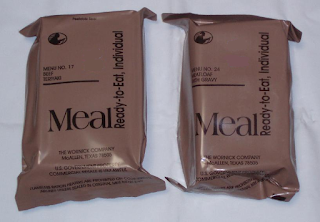
Just recently found an interesting video of a couple brave souls sampling a variety of aged MRE packs - something that I'd be nervous to do myself. Although after watching this I feel a little better about the 2 MREs that have been in my fridge for a couple of years...

Just recently found an interesting video of a couple brave souls sampling a variety of aged MRE packs - something that I'd be nervous to do myself. Although after watching this I feel a little better about the 2 MREs that have been in my fridge for a couple of years...
Sunday, July 5, 2015
Growing Your Own Food - Self Sufficiency (Part II)
[Second Attempt]
 Yet another go at vegetable gardening and this time it's actually working. Last year we started gardening with seedlings inside and transplanting them into our raised garden when we thought they were ready. We were dead wrong. Not only were the seedlings not ready, it was too early in the season as a few cold New Hampshire nights pretty much killed everything in about a week's time. The only yield we had was literally ONE summer squash. On top of everything else the soil wasn't exactly in perfect condition for planting either.
This year I decided to do it right - gutted the garden bed early on and added fresh soil with a mixture of compost and waited till there was no more cold nights in the forecast. Also made sure that the nearby family of groundhogs would have a hell of a time breaking in with two layers of fencing. It ain't pretty, but it gets the job done.
Learn from your mistakes and evolve - otherwise you won't survive.
Current vegetables growing: Tomatoes
Lettuce
Spinach
Zucchini
Summer Squash
Red Pepper
Jalapeño

This year I decided to do it right - gutted the garden bed early on and added fresh soil with a mixture of compost and waited till there was no more cold nights in the forecast. Also made sure that the nearby family of groundhogs would have a hell of a time breaking in with two layers of fencing. It ain't pretty, but it gets the job done.
Learn from your mistakes and evolve - otherwise you won't survive.
Current vegetables growing: Tomatoes
Lettuce
Spinach
Zucchini
Summer Squash
Red Pepper
Jalapeño
Wednesday, May 6, 2015
Rocket Stove Concept #1
Backyard Projects - Rocket Stoves
After digging around my 100 year-old shed I found a collection of cinder blocks that were used at one point to make steps off our patio and thought to myself, "With these I think I can make a small rocket stove."
After a couple minutes of different configurations I came up with one that actually allowed for a fire chamber and chimney setup and it worked pretty well. One wood match on some yard debris (which I have plethora of) in the chamber and it was off and cooking!
Next up will be a much heavier duty stove that I plan and making as a fixture in our backyard and also will be a lot safer by being surrounded by stone and away from anything that could burn.


After digging around my 100 year-old shed I found a collection of cinder blocks that were used at one point to make steps off our patio and thought to myself, "With these I think I can make a small rocket stove."
After a couple minutes of different configurations I came up with one that actually allowed for a fire chamber and chimney setup and it worked pretty well. One wood match on some yard debris (which I have plethora of) in the chamber and it was off and cooking!
Next up will be a much heavier duty stove that I plan and making as a fixture in our backyard and also will be a lot safer by being surrounded by stone and away from anything that could burn.
Monday, May 4, 2015

Friday, May 1, 2015
Alternative Cooking Methods
This guy is my new hero -
YouTube channel: Cooking Different
Tea Light Candle Jalapeño Cheddar Burgers
A Heavy Duty $6 DIY Rocket Stove
YouTube channel: Cooking Different
Tea Light Candle Jalapeño Cheddar Burgers
A Heavy Duty $6 DIY Rocket Stove
Friday, April 17, 2015
Graphic Novel website is live!

Thursday, April 16, 2015
Releasing web graphic novel
Sorry for the lack of posts recently - luckily I have a good reason for it. Tomorrow on 4/17/15 we'll be going live with our graphic novel site.
Get excited!
For updates please see our Facebook page - The Wanderers: A Graphic Novel

Get excited!
For updates please see our Facebook page - The Wanderers: A Graphic Novel
Saturday, March 28, 2015
Reference Photo for Graphic Novel Concept

A surprisingly late snowfall made for a good photo shoot for reference for a graphic novel in the works. More on that soon...
Thursday, March 12, 2015
Surviving New England Winters

One of the major insights missing from most people's eyes is why New Englanders complain about weather all-year round. New England is one of the few regions in the United States that fully experiences all four seasons with such style. Spring brings months of rain and mud, summer dumps humidity and sweltering heat, the fall brings 'leafers' and the winters as of late have been beyond brutal with unrelenting cold and snowfall.

This current winter (2014-2015) has been one of the toughest I've seen in my entire life. Going back further - people are saying this compares to the Blizzard of 1978. Towards the end of 2014 the winter was quick to start at first, hitting many with snow right before Thanksgiving causing countless families to lose power for Thanksgiving Day. After that it slowed down. The temperatures weren't terrible and snowfall was minimal till the end of 2014. Once 2015 started though it dumped on huge portions of New England. Many lost power or were trapped in areas of heavy snowfall. Also enough nights of negative or least single and double digit temperatures to remind people of the film: The Thing.
For many this has proved to be one of the most challenging and expensive winters to date and it certainly has been for us. Oil, electric and wood pellet usage have all skyrocketed and the risk for injury has been high throughout. Commuting to work in poor conditions is always dangerous, but even ice dams on the edges of roofs can be dangerous. While breaking up ice around the foundation of my house a 50 lb. icicle broke free from the edge of my roof and smashed my hand - bruising it and leaving it sore for about 3 days.

News reports of feet of snow and ice built on house roofs causing them to cave-in ran rampart causing panic among most. Products used to melt ice for roofs sold out within a hundred mile radius of us and prices for them doubled and almost tripled online by early February 2015.
All we could was hunker down and maintain our house as best as we could. For the majority of January and February my backyard was inaccessible with thigh-height snow.
Now that we're close to mid-March the main issue everyone is going to run into is basement flooding from all the melting snow once Spring rolls around.
All you can do is keep working at it, homeowners.
Let's just make it till the end, shall we?
Saturday, January 24, 2015
Path to All Natural
[Challenging Road Ahead]
Slowly, but surely we're converting the consumables in our home to have less and less chemicals and artificial additives. First and foremost, we removed MSG from our daily diet, then sodium nitrite a couple years ago. Then it was the lessening of high fructose corn syrup. Now begins the removal of artificial colorings.
The challenge is inherent from the get-go. Any packaged food or drink from just about any grocery store will have at least one of these things. Without the time and freedom to make every single meal we eat from scratch this feat of all-natural eating will prove difficult. Until we live our lives at our dream homestead we'll be fighting against these problems for as long as we shop. In the meantime we can at least curb how much artificial ingredients we eat.
Slowly, but surely we're converting the consumables in our home to have less and less chemicals and artificial additives. First and foremost, we removed MSG from our daily diet, then sodium nitrite a couple years ago. Then it was the lessening of high fructose corn syrup. Now begins the removal of artificial colorings.
The challenge is inherent from the get-go. Any packaged food or drink from just about any grocery store will have at least one of these things. Without the time and freedom to make every single meal we eat from scratch this feat of all-natural eating will prove difficult. Until we live our lives at our dream homestead we'll be fighting against these problems for as long as we shop. In the meantime we can at least curb how much artificial ingredients we eat.
 |
| Nothing unnatural here |
 |
| Trying the fluoride-free route |
 |
| Bread products are notorious for additives |
Monday, January 19, 2015


Wednesday, December 31, 2014
A Quiet New Years Eve
A good night to Bug-In.
Happy New Years, everyone! Let us wish for at least a tolerable 2015!

Happy New Years, everyone! Let us wish for at least a tolerable 2015!
Subscribe to:
Posts (Atom)